Andy Gleadhill is a multi-award-winning musician, author, educator, composer, ethnomusicologist and teacher trainer.
Last month I caught up with Percussion Plus Global Ambassador Andy Gleadhill to talk all things percussion in music education – from djembe to samba and steel pans, and what makes effective class music teaching. Here’s everything from our Q&A:
Why is percussion such a good starting point for group music-making?
Two words: accessibility and inclusion. Percussion, if taught well, is easy to play and can be adapted to any kind of music, for pupils of all abilities and age groups. Pupils at different levels of musical experience can play together easily, which makes it an ideal medium for inclusive learning without limiting anyone’s level of participation or interest.
That’s one of the reasons our Slap Djembe book includes three different parts for each piece – so everyone can join in, whatever their ability and still feel challenged and engaged.

You mention Slap Djembes – what is it that makes djembe teaching so engaging for pupils in particular?
I love that pupils have direct physical contact with the instrument – you hold it in your lap, and that ‘skin-on-skin’ connection lets you feel the rhythms through your body. The music itself is captivating. Many West African djembe tunes are made up of three or more interwoven polyrhythmic beats that create intriguing musical structures. When you arrange these tunes musically, with variation in texture, dynamics, and structure, they really engage both players and audiences alike.
Another great aspect of djembe drumming is that the playing posture aids Whole Class Ensemble Teaching (WCET), because the player naturally looks forward towards the teacher. This is helpful for learning technique, and also for staying musically engaged!
What makes the Slap method (the drums and accompanying books) such good resources for djembe circle lessons?
The Slap Djembe books not only introduce a wide range of rhythms from around the world, they also guide teachers on how to teach and present them as performance-ready pieces. They’re designed for all teachers – even those without a musical background or previous drumming experience.
Students can learn a great deal just by engaging with the resources, without lessons being dominated by the usual process of learning to read notation. The books weave in technical guidance in a subtle way, leaving plenty of room for pupils to build good playing habits and musicianship through listening and watching.

Any quick tips you would give to teachers new to leading djembe groups?
Keep it simple, for both yourself and the pupils. Start by building confidence in playing the djembe. Use the simple warm-up exercises from the book, focusing on good tone and correct technique as given by the instructive drum head. Once that’s in place, move on to the first basic tunes and layer up each rhythm gradually to develop a full drumming piece.
Turning our attention to another popular class percussion genre, samba – how does it compare to djembe drumming?
Do you mean musically or in terms of playing technique? There are differences in both these aspects.
Musically, samba relies heavily on accents, particularly off-beats, and while it has roots in African music, it also draws from Indigenous South American and Portuguese military music traditions – that’s where instruments like the caixa (snare drum) come from.
The instrumentation is more varied too, with a wide range of drums, shakers, bells, and whistles. Technically, samba drums are usually played with sticks rather than hands. This can present some classroom management challenges – pupils can be tempted to overplay with sticks, whereas on djembes, if they hit too hard, they will simply give themselves sore hands!
Samba often demands a little more teaching experience and particularly strong class management skills, as having instruments that use beaters can make younger pupils a bit more excitable! Don’t let that put you off trying it with these age groups, though. Samba can work really well in KS1, as long as expectations are age-appropriate.
The varied instrumentation might present a challenge for many school departments, so how can samba drumming be adapted for those with limited resources?
If your school has a drum kit, you already have the makings of a samba band!
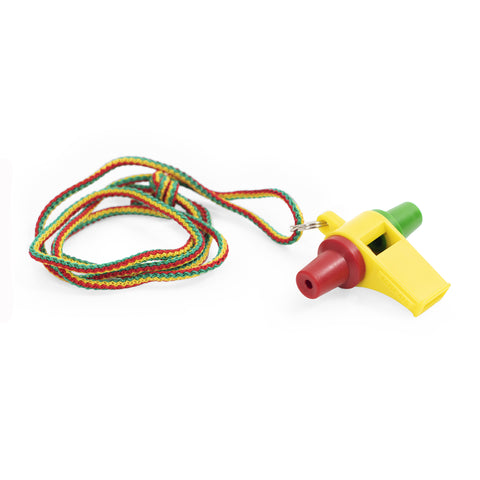
Turn the bass drum on its side between two chairs and it becomes a large surdo (samba bass drum). The floor tom makes a smaller surdo, the rack toms become repeniques, and the snare serves as the caixa. Add a few small accessories and a whistle (or apito, in Portuguese), and you’re set. You can always expand gradually as funding allows – samba is incredibly adaptable in that respect.
That’s a very useful tip! If we are looking to broaden the soundscape and get more students involved, what other instruments can be used to bolster a samba band?
Pretty much any percussion can be used. The key is balance. Group instruments by size and timbre – small drums together, large drums together, shakers with shakers, and so on. This keeps the sound clear and prevents the larger drums from overpowering everything else. If you have too many large surdos, they’ll dominate, muddying the overall sound. Fewer big drums and more small ones make for a more interesting texture.
You can even add brass and woodwind for a melodic layer – it makes performances really exciting. Some of my favourite tunes to mix with samba include Watermelon Man by Herbie Hancock, On Broadway by Jerry Leiber and Mike Stoller, and Livin’ la Vida Loca by Ricky Martin. It’s also a great ensemble opportunity for GCSE drummers who are often used to playing solo.

Moving onto tuned percussion now: another genre you’ve championed is steel pan music. What makes Jumbie Jam steel pans so effective in schools? How do these lessons differ from non-tuned percussion?
Jumbie Jams are fantastic for introducing both cultural variety and melody into the classroom. Because they use a diatonic scale in G rather than a full chromatic scale, pupils can start playing simple tunes right away.
Playing involves striking each note gently with beaters so the sound rings clearly. All pupils can start by playing in unison, and you can add class percussion to involve more pupils – for example, pairing each Jumbie Jam player with a percussion partner and swapping halfway through.
My Percussion Buddies book provides templates for pairing percussion with melodic parts, and my Caribbean Steel Pans book was written especially for teaching Jumbie Jams.
Much like with Slap Djembes, steel pan courses are often taught by generalist teachers (primary school teachers not specialised in music). How can these teachers use Jumbie Jams without prior steel pan experience?
Start by learning the simple G major scale – ascending and descending. It initially looks like the notes are not laid out in an intuitive order, but if you familiarise yourself with their positions you will find that they actually are!
Start with your left hand on the G (at the bottom of the pan, 6 o’clock) and your right hand on the A (at 12 o’clock). Then simply rotate the hands clockwise step-by-step to play your G major scale. It’s vital to get this down, just to make sure you’re never a step behind your students; they can pick things up extremely fast!
Once you’ve got that, play the G major arpeggio, then pass that knowledge on to your pupils. The Caribbean Steel Pan book walks teachers through this process step by step – it’s very intuitive once you’ve got the basics.

Finally, as someone with vast experience, what types of class percussion do you find best suited to each age group – KS1, KS2, KS3?
Class percussion should be introduced as early as possible. It helps embed a sense of rhythm and teaches pupils to recognise pitch, dynamics, and duration early in their education – not just their musical development.
For younger children, I use a ‘Rhythm Explorers’ approach, starting with fundamental instruments like bongos, claves, maracas, tambourines, and triangles.
At KS1, tuned percussion such as chime bars can introduce melody – something younger children often connect with strongly. I’m even an advocate for introducing gamelan at KS1 or KS2 to broaden their understanding of different tuning systems.
By KS2 (US elementary), pupils have the strength and coordination to play djembes properly – the Slap Djembes are especially good as they’re lightweight.
At KS3 (US middle school), you can move on to Jumbie Jams and even (if you have access to one) gamelan. Students at this age will be better equipped to appreciate harmony created by several melodic parts.