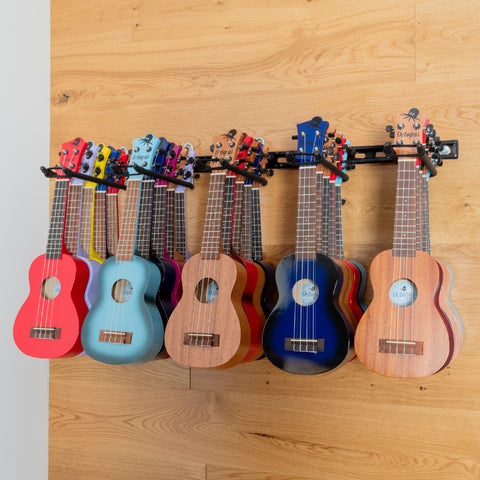
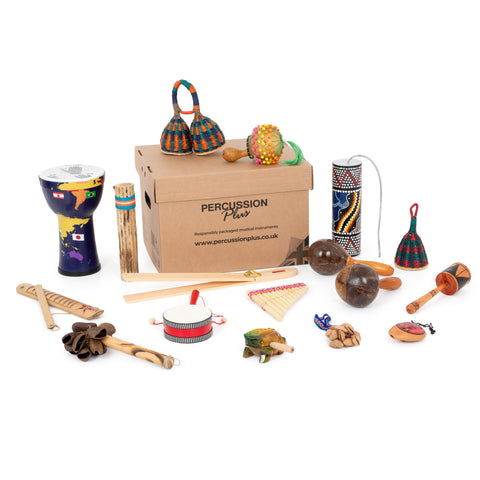
Music lessons and activities provide a natural environment for developing confidence and emotional resilience. While research continues to highlight the positive impact of music in schools, teachers often ask what practical, everyday choices they can make in lessons to consistently support student wellbeing. The good news is that small, intentional decisions in planning and delivery can make a noticeable difference across all age groups.
Below, we explore several ways that musical routines, task design and classroom culture can help students feel secure, motivated and ready to learn.
Predictable routines reduce anxiety
Clear and familiar routines help students settle quickly at the beginning of a lesson, giving them the mental space to focus on the tasks ahead.
Start each session with a simple, fun and enjoyable warm-up. Don’t be afraid to repeat their favourites as this provides reassurance at the start of each lesson. These warm-ups become miniature rituals that students can look forward to and that mark the transition into focused musical learning.
Maintain consistent seating arrangements at the beginning of lessons to encourage a calm atmosphere. A designated place gives each student a sense of stability and sets expectations before instruments or equipment are introduced. Alongside this, clarity around movement, instrument handling and transitions helps prevent uncertainty. Expectations may be reinforced through simple verbal reminders, visual prompts or teacher modelling so that routines become part of the natural flow of the lesson.
Creating a safe environment for musical risk-taking
Students are far more willing to experiment, perform and refine their work when they feel safe and supported. A structured, calm teaching environment helps them take the small risks that music-making requires - from trying a new pattern on a drum to sharing a musical idea with the class.
Short, achievable tasks give everyone a chance to contribute early on, building momentum without pressure. Teachers who model ‘mistakes’ openly help to normalise them as part of the learning process; pupils then see errors not as failures but as steps towards improvement.
Feedback that remains precise and focused on musical objectives also helps students stay motivated, as it gives them a clear sense of what they are doing well and what to try next.
Building confidence through progressive, achievable tasks
Students flourish when they can sense their own progress. Breaking down complex activities into smaller steps helps learners understand the pathway ahead and experience success sooner. Whether students are learning a new chord, mastering a rhythm or working towards an ensemble performance, these small milestones build confidence and keep engagement high.
Choosing repertoire that offers early wins with clear, flexible routes towards more challenging material supports both mixed-ability groups and individuals working at different paces. Taking time to acknowledge these moments of progress, whether in groups or one-to-one, reinforces motivation and strengthens a culture of shared achievement.
Using music for regulation and focus
Music has a natural ability to help regulate mood and energy when used intentionally. Pulse-based warm-ups or simple rhythmic echo games can quickly refocus attention, making them effective tools after transitions or busy parts of the school day. Short periods of listening can also reset a group’s energy, acting as a calm pivot point between activities.
Structured group tasks, such as ensemble sections or paired improvisation games, give students opportunities to practise teamwork and social interaction, supporting both confidence and communication skills. Balancing these group elements with moments of individual focus helps students feel grounded and ready to engage with more demanding musical learning.
Ensuring access and inclusion
Inclusive classrooms foster participation by ensuring every student has a meaningful role, regardless of musical experience, confidence level or additional needs. This may mean adapting tasks in the moment: simplifying a rhythm, offering an alternative instrument, or providing a visual cue, as well as planning differentiated entry points at the outset.
For some learners, alternative roles such as sound engineering, score-reading support, or conducting can offer equally valuable pathways into music-making without the pressure of performing. Regularly mixing the way partners or groups are selected also encourages shared responsibility and teamwork, helping prevent students from feeling isolated or excluded.
Supporting wellbeing through musical learning
At its best, the music classroom is a place where students can develop skills that go far beyond the musical: confidence, collaboration, self-expression and resilience. By embedding predictable routines, designing achievable tasks and nurturing a supportive environment, teachers can ensure that wellbeing is not an add-on but a natural part of everyday musical activity.
If you’d like to explore ways to expand your music-making resources or develop new approaches to classroom music, our education team is always here to help. Email sales@chamberlainmusic.com or call 01428 658806 to speak to our specialists.